
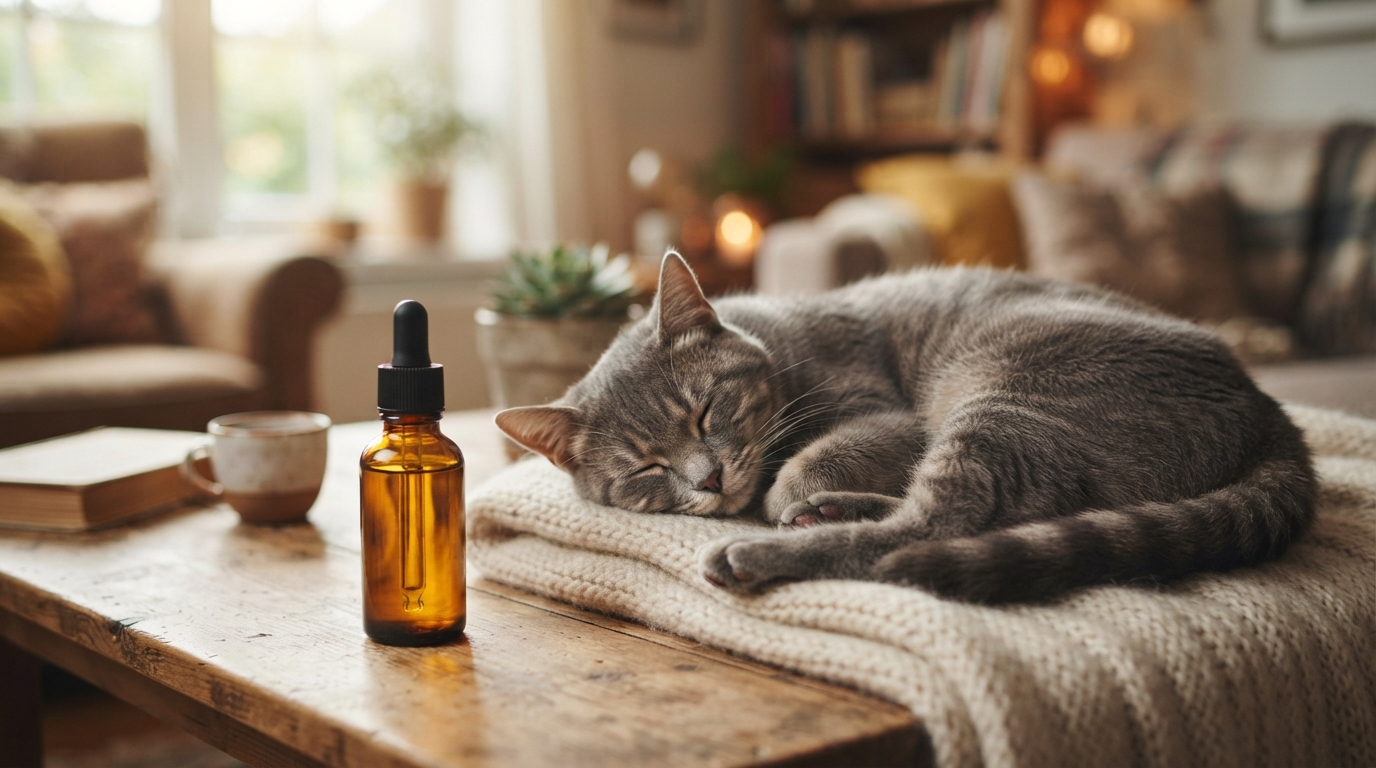
A cat’s response to a new supplement can be difficult to predict. Felines differ in body size, metabolism, age, health status, and medication use, so a product that seems appropriate for one animal may not be suitable for another. This has become especially relevant as Holistapet CBD Oil for Cats appears in more pet products and online discussions. Understanding how these products are formulated, what research actually shows, and which warning signs require attention can help cat owners approach the subject more carefully.
Starting With the Basics
CBD stands for cannabidiol, a compound naturally present in cannabis and hemp plants. CBD is different from tetrahydrocannabinol, commonly called THC. THC can cause intoxication and has been associated with adverse effects in animals.
Pet CBD products may contain an extract mixed with a carrier oil. Some are made with broad-spectrum or full-spectrum hemp extracts, while others use isolated CBD. These terms can describe different cannabinoid profiles, so reading the laboratory information is more reliable than assuming every product has the same composition.
The amount of CBD can also vary widely. A product containing 500 milligrams of CBD in an entire bottle does not mean that each drop contains 500 milligrams. The concentration must be considered in relation to the bottle volume.
Why Concentration Matters
Consider two bottles that each contain 30 milliliters of oil. One contains 300 milligrams of CBD, while the other contains 600 milligrams. The bottle size is identical, but the concentration is different.
This simple comparison shows why labels should be read carefully. Statements such as “hemp oil” or “hemp extract” do not automatically tell the consumer how much CBD is present.
A clear label should identify the cannabinoid concentration in a measurable way.
What Is Known About Cats and CBD?
Research involving cats is still limited compared with research involving humans and dogs. Studies have examined CBD absorption and blood concentrations in healthy cats, helping researchers understand how the compound behaves after oral administration.
One published feline study evaluated repeated oral CBD administration and monitored safety-related observations. Gastrointestinal effects, including vomiting and diarrhea, occurred in some cats.
Such findings are useful, but they do not prove that CBD treats a particular feline condition. A study showing that an animal absorbs a compound answers a pharmacological question. It does not establish therapeutic effectiveness.
Why Dog Studies Cannot Be Applied Automatically
CBD research involving dogs has received more attention. Studies have investigated possible effects related to osteoarthritis and seizure disorders, among other areas.
It can be tempting to use those findings when discussing cats, but species differences matter. Cats have unique metabolic characteristics, and their responses cannot be predicted solely from canine results.
Research in dogs can guide future feline studies. It should not be presented as direct proof of a benefit for cats.
Assessing a Product Before Purchase
Product quality is one of the most practical issues for consumers. Pet CBD products are not all made with the same ingredients, extraction methods, or manufacturing controls.
The first step is to examine the complete ingredient list. The front of a bottle may emphasize hemp or CBD, while the detailed label provides information about carrier oils and additional ingredients.
A careful review can include:
- CBD amount per milliliter
- Total CBD in the container
- THC concentration
- Carrier oil
- Additional botanical extracts
- Flavoring ingredients
- Batch number
- Manufacturer information
- Independent laboratory testing
Products with vague cannabinoid information are harder to evaluate.
Understanding Certificates of Analysis
A certificate of analysis, or COA, is a laboratory report that can provide information about a tested product sample. Depending on the laboratory, the report may list cannabinoid concentrations and screening results for contaminants.
The batch number should correspond with the product being purchased. A generic laboratory statement that does not identify the tested batch provides less useful information.
A COA also has limits. It cannot establish that a product will treat anxiety, pain, inflammation, seizures, or another medical condition. It mainly helps verify what was found in the sample.
Ingredients Deserve Close Attention
CBD is only one part of an oil formulation. The carrier oil and additional ingredients can influence whether a product is appropriate for a particular cat.
Some products contain flavoring agents intended to make administration easier. Others include herbs or essential oils. Cats have distinctive metabolic pathways, and certain essential oils can be harmful to them.
A shorter ingredient list can make evaluation easier, although simplicity alone does not prove safety or effectiveness.
Products made specifically for pets may provide clearer animal-use information than products intended for humans, but pet labeling should still be reviewed carefully.
Avoid Assuming Natural Means Harmless
Hemp is a plant, but the word “natural” does not establish that a substance is safe for every animal.
Many substances found in plants can cause adverse reactions in pets. Concentration also matters. Even an ingredient that is tolerated at one exposure level can cause problems at another.
For cats, product selection should therefore depend on evidence, ingredient transparency, and professional guidance rather than the natural image of a product.
Discussing CBD With a Veterinarian
A veterinarian can help determine whether a cat’s symptoms should be investigated before a supplement is introduced. This is particularly important when the cat has an existing diagnosis.
A cat that hides more often, stops grooming, loses interest in food, or becomes less active may be experiencing pain or illness. A supplement should not be used as a substitute for identifying the underlying problem.
Medication interactions are another consideration. CBD can affect certain enzymes involved in drug metabolism. This means that combining CBD with some medications could potentially alter how those medicines are processed.
Information to Bring to the Appointment
A useful veterinary discussion can include:
- The reason CBD is being considered.
- The cat’s age and approximate body weight.
- Current prescription medications.
- Other supplements or treats.
- The exact CBD product being considered.
- The product’s ingredient list.
- Available laboratory documentation.
- Any existing liver, kidney, digestive, or neurological concerns.
The more precise the information, the easier it is to assess potential risks.
Monitoring a Cat After a New Product
Cats often communicate discomfort through behavior rather than obvious symptoms. A change may appear as reduced interaction, altered sleeping patterns, hiding, or a change in eating habits.
Keeping a written record can make these changes easier to recognize. Record when the product was given and note appetite, water consumption, bowel movements, energy, movement, and behavior.
Potential signs of an unwanted response may include:
- Vomiting
- Diarrhea
- Excessive sleepiness
- Unsteady walking
- Tremors
- Excessive drooling
- Changes in urination
- Unusual vocalization
- Marked behavioral changes
Persistent or severe symptoms should receive veterinary attention.
THC Exposure Is a Separate Safety Issue
CBD and THC should not be treated as interchangeable compounds. THC can cause intoxication in cats, and accidental exposure to cannabis products can produce significant neurological and behavioral signs.
A cat exposed to THC may become unusually sleepy, uncoordinated, or disoriented. Other possible signs include dilated pupils, urinary accidents, vomiting, tremors, and changes in heart rate.
Cannabis products should be stored securely and separately from pet supplements. A curious cat can knock over containers or chew packaging that has been left within reach.
If accidental ingestion occurs, the product packaging can help a veterinarian determine what the animal may have consumed.
Making Sense of Dosage Discussions
Online dosage charts can appear convenient, but generalized numbers can create problems. A safe amount cannot be determined from body weight alone.
Product concentration, formulation, administration method, health conditions, concurrent medication, and individual sensitivity can all affect the risk profile.
For that reason, dosage advice from a general online chart should not replace veterinary assessment. A veterinarian familiar with the cat’s medical history can provide guidance that takes individual circumstances into account.
Understanding the Growing Market
The pet CBD market has expanded as consumer interest in cannabinoid products has increased. Commercial market reports project continued growth, although estimates differ because researchers use different definitions, regions, product categories, and forecasting periods.
Market statistics measure commercial activity. They do not demonstrate that CBD is clinically effective for cats.
This distinction can help prevent a common misunderstanding. A product may become popular because many consumers are interested in it, while scientific research is still determining whether it has measurable benefits for a particular condition.
For feline health decisions, clinical evidence and veterinary assessment remain more useful than sales growth.
Final Thoughts
CBD research in cats is developing, but evidence remains limited for many proposed uses. Careful label review, attention to THC and other ingredients, and veterinary guidance can help reduce unnecessary risks when considering cannabinoid products for feline care.